


Advice for landowners
Whether you own or manage woodland or farmland, deer management is an important part of sustainable land stewardship. The following information is designed to guide and support you in deer management on your land.
1. Assess the problem
Before taking action, it’s important to understand the level of deer activity on your land. If you would like guidance with these steps, many deer managers will assist you.
- Carry out a deer impact survey
Record evidence of browsing, tracks, droppings, rest areas, crop damage, and more. Surveys help you determine whether a deer management plan is needed. - Use government resources to plan
The government provides templates and guides to help you create a deer management plan, and may support grant applications or capital payments.
Useful resources:
- Deer species management plan (PA7) template. This template is essential if you’re applying for capital grant payments
Use this template to:- Assess the impact of deer on your land.
- Record control and monitoring methods.
- Create a map of your holding.
- WS1 Deer management plan guide (for existing Woodland Supplement WS1 agreements started before February 2024)
- Helps you to complete the deer management plan template.
- Ensures compliance with the UK Forestry Standard and Forestry Commission grant schemes.
- CWS1 Deer control and management (for new applicants)
- Provides guidance for new Woodland Supplement applications.
- Explains operational requirements and best practice for deer management.
Note: Make sure you select the right resource based on whether your agreement is new (CWS1) or existing (WS1).
- Management requirements for deer control – Woodland Supplement (official operational guidance)
- Provides detailed operational guidance for managing deer under the Woodland Supplement Scheme.
- Covers both ongoing WS1 agreements and new CWS1 applications.
2. Plan and collaborate
Wild deer don’t stay within property boundaries; effective management often requires a landscape-scale, coordinated approach.
Why collaboration matters
Deer move across different areas of land and movement is often seasonal.
Coordinated efforts across neighbouring landowners can increase effectiveness, reduce duplication, and help achieve sustainable deer numbers.
Good collaboration also works to pre-empt issues like poor condition, welfare concerns, impact on habitat, and restricted movements (fencing can bottleneck populations and lead to higher mortality).
Shared resources (e.g. deer larders/chillers, thermal cameras, survey efforts) can make deer management more efficient and cost-effective.
What to do
- Reach out to your neighbours to discuss deer impacts.
- Consider forming (or joining) a deer management group to coordinate timing and methods of control, share resources and agree on targets for deer numbers.
- Share management schedules and notify others of area use (livestock, shooting, forestry, public access) to help avoid conflicts.
3. Implement your plan
Once you’ve assessed the impact deer are having on your land and agreed a plan, you are ready to implement it.
- Appoint a deer manager (see next section).
- Apply for relevant grants or funding support.
- Carry out baseline surveys and plan culls or other control methods.
- Keep accurate records before, during and after (location, date species, sex/age of deer culled, carcass disposal or venison production, changes in vegetation/browsing damage over time).
Note: Many woodland and conservation grant schemes require a formal deer management plan (e.g. PA7 / WS1) as a condition for funding (see previous section).
How to appoint a deer manager – best practice
If you decide to appoint a deer manager, it’s important to approach this carefully and with clear expectations.
Documentation and qualifications
Request copies of the deer manager’s firearms certificate, annual insurance, and any qualifications (e.g. a DSC1 Deer Stalking Certificate). While DSC1 is not legally required in the UK, many police firearms departments expect it.
References and track record
Ask where they have previously managed deer and whether you may contact previous clients/landowners for references.
Define team, access and scope
Agree how often culling will take place, who will be present, whether others (assistants/trainees) can be involved, and under what conditions. If more than one person will handle firearms or carcasses, ensure all relevant parties have insurance and valid certificates.
Guest/third-party arrangements
If the deer manager might bring guests (helpers, trainees, friends), make sure this is agreed in writing and included in the permit/agreement.
Carcass use/venison agreement
Agree what happens with culled deer: will the deer manager retain carcasses, provide venison, or dispose of responsibly? Specify in the deer management agreement.
Communication and notification
Establish a clear notification system (e.g. WhatsApp, group message) prior to culling events, especially important if there are other land uses ongoing (livestock, forestry, pheasant shoots, public access).
Cull targets and record keeping
Set realistic deer management targets (e.g. desired reduction in deer density, sex/age structure, frequency of cull) and require the deer manager to maintain detailed records (dates, numbers, species, sex/age, GPS location, disposal/venison use, photos if possible). Annual impact assessments (e.g. damage surveys, browsing impact) are recommended to evaluate effectiveness.
Use a formal agreement
Even if culling is informal or occasional, having a written agreement, using a template such as this one from High Weald National Landscape is strongly recommended. This should include landholding boundaries (with a map), landowner and deer manager details, rights and responsibilities, and any special conditions (parking, high-seats, use of larder/chiller, carcass disposal).
4. Monitor and report
Continued monitoring and reporting are essential to ensure your deer management plan is working.
Use repeated impact surveys (vegetation regeneration, browsing damage, sapling survival, track and droppings, deer sightings) on an annual (or seasonal) basis. This helps you measure whether deer numbers and browsing pressure are falling.
Maintain detailed cull records (species, number, sex/age, date, location, carcass fate / venison use). If using a deer manager, ensure these records are shared with landowner / land manager.
Review and, if needed, revise your deer management plan each year or after major changes (e.g. land use change, neighbouring landowners joining or leaving a group).
For larger or coordinated efforts, consider establishing a shared database or collaborative monitoring group. This supports landscape-scale management and helps avoid simply shifting deer from one patch of land to another.
If you are applying for grant support, these records will help demonstrate compliance and effectiveness.
Grants from the Chilterns National Landscape
You may wish to consider applying for a Farming in Protected Landscapes (FiPL) grant to assist your deer management efforts.
Grants have been approved for:
- High seats
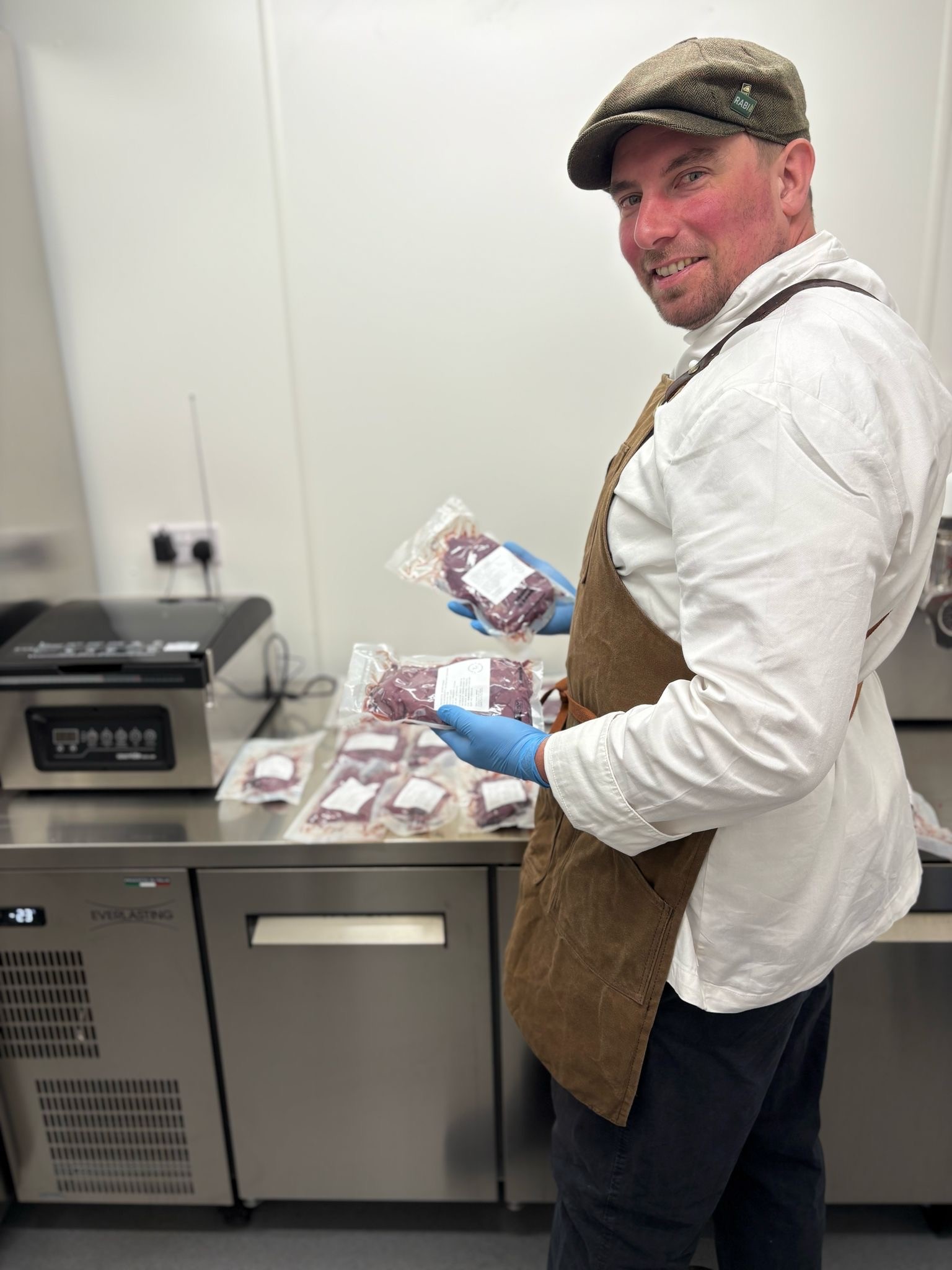
- Chillers
- Processing units
If you have ancient woodland and wildlife-rich sites, your application will be stronger. Contact farming@chilterns.org.uk or visit the FiPL web page for more help.
FAQs for farmers and landowners
1. Permissions and agreements
Do I need a written permission or a contract when allowing someone to manage deer on my land?
Yes. A written agreement protects both parties and clarifies expectations around safety, access, cull targets, carcass handling, and record-keeping. Even informal arrangements benefit from being documented.
Who is responsible for mapping boundaries and access points?
Landowners should provide accurate maps of boundaries, high-risk areas (e.g. footpaths, rights of way), livestock locations, and any exclusion zones. This ensures safe and legal deer management.
Can I give more than one person permission to manage deer?
Yes, but it requires clear scheduling and communication to avoid conflicts. Many landowners designate one lead deer manager to coordinate activity.
2. Safety, liability and insurance
Am I liable if an accident occurs on my land?
A competent, insured deer manager is responsible for their own actions. However, landowners should ensure they provide safe access, clear boundaries, and an up-to-date agreement. Always check the deer manager’s insurance.
Should I be notified every time a cull takes place?
Good practice is yes. Agree a system (WhatsApp/email) so you’re aware when the deer manager is on site, especially if contractors, public events or livestock movements are planned.
Can culling take place when the public are on site?
Yes, but only by competent deer manager using safe backstops, suitable vantage points and avoiding high-use access routes. You may need temporary signage.
3. Working with professional deer managers
How do I check whether a deer manager is competent?
Request insurance, firearms certificate, relevant qualifications (e.g. DSC1), references from previous permissions, a sample cull/monitoring record if available.
Should I allow guests, trainees, or additional shooters?
Only if explicitly agreed in writing. All individuals must hold appropriate insurance and be named in the agreement.
How often should a deer manager report back to me?
At minimum: after every cull (for safety) and at the end of each season (for cull data). Some landowners request monthly updates.
4. Deer impact and stewardship
Do I need to carry out my own monitoring if a deer manager is managing the deer?
Yes. Landowners remain responsible for demonstrating that deer management is effective, especially where grant conditions apply.
What if deer damage continues even with a deer manager in place?
Review cull levels, change management patterns, or consider coordinating with neighbours. You may need additional survey data to guide decisions.
Can I include deer management in wider farm or woodland plans?
Absolutely. Deer control should be integrated with woodland creation, biodiversity targets, regenerative farming, and agri-environment schemes.
5. Access, infrastructure and operational issues
Do I need to provide facilities such as a larder or chiller?
Not always, but they help ensure hygienic carcass handling. Some deer managers may bring their own mobile equipment or use shared facilities with neighbouring estates.
Who installs and maintains high seats?
This should be agreed in advance. Some landowners provide high seats; others allow the deer manager to install and maintain them.
Can culling take place alongside other land uses (e.g. shoots, forestry, grazing)?
Yes, but requires coordination. Provide the deer manager with dates for forestry operations, shoot days, grazing movements, public events and contractor work.
6. Legal and regulatory considerations
Do I need any licences to allow deer control?
Generally, no, unless night shooting, out-of-season control, or special circumstances apply. Your deer manager should advise and handle applications where needed.
Who is responsible for complying with food safety regulations for venison?
The deer manager must ensure that carcasses destined for the food chain meet hygiene requirements. Landowners should ensure facilities meet basic standards if used for processing.
Can I restrict what equipment or firearms the deer manager uses?
Yes. Conditions around calibre, silencers, high-seat use, vehicle access, and equipment storage can be included in the deer management agreement.
7. Collaboration and neighbour relations
Do I need permission from neighbours before starting deer control?
No, but informing neighbours builds trust, reduces conflict and encourages coordinated management.
What if my neighbours are not managing deer at all?
You can still improve conditions on your land, but results may be slower. Consider starting a conversation or inviting them to a deer management group meeting. Even if they are not happy with the shooting of deer on their land, they may be willing to have the deer walked off their land at the time of a collaborative cull so that there is no safe haven option.
Can I join or create a local deer management group?
Yes. Groups help standardise cull targets, share resources, and achieve landscape-scale impact.
8. Funding and support
Are there grants that support deer management?
Yes, depending on your location and land type. Schemes such as Farming in Protected Landscapes, woodland grants and biodiversity funding often require or support deer management plans.
Do I need a deer management plan to access funding?
Often yes. Most woodland and habitat creation schemes require a formal plan (e.g., PA7 or WS1).
Who can help me write or review a deer management plan?
The Forestry Commission and professional deer managers can all support plan development.
9. Termination and changing arrangements
Can I change or end a deer management agreement?
Yes, but follow the notice period specified in your agreement. Always communicate reasons clearly and keep records.
What if I want to switch to a different deer manager?
Ensure the outgoing deer manager returns any keys, maps or equipment. Conduct a brief review so the new deer manager has accurate data and understands current deer pressures.