


Volunteering online for Woodlanders’ Lives
One of our CCC Woodlanders’ Lives project volunteers shares her experience.
Since retiring from the world of work in 2018 I’ve re-discovered my love of history. But this time it isn’t the Kings and Queens of England, or great European Wars, but the local folk of Buckinghamshire . My first forays into research post work were to discover the unsung female heroines of the Amersham area in the early to mid-twentieth century for Amersham Museum. I enjoyed this a lot, so when I was offered the chance via the Amersham Museum, to volunteer for the Woodlanders project I leapt at it.
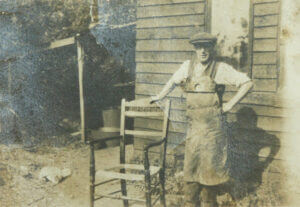
I am really enjoying the research. I particularly like the focus on one village – Winchmore Hill, near Amersham – and trying to uncover the lives of those who lived and worked there in the nineteenth and early twentieth century. As well as the academic research through Ancestry.co.uk and local newspapers I have been lucky enough to make direct contact with descendants of one of the chair-making families I am researching who still live locally. They have generously shared information, stories and photographs that I would not have got anywhere else.
I am finding it fascinating to build up a picture of the lives of woodland families in the past. It’s good to know I am part of a team and it’s been very helpful to have the support of Bucks New University as my investigations move forward. My aim is to pull together a walking route around Winchmore Hill to highlight the families who lived and worked there in the past and how they lived their lives. I am hoping this will be both entertaining and informative.
-Jane Barker
Related news

Spooky season in the Chilterns
Explore historic haunts, ghostly goings-on and autumn adventures across the Chilterns this Halloween.

Historic Ridgeway Project secures £129,100 project extension
Historic England funding will expand conservation work along the Ridgeway National Trail.

Discover opportunities for young people across the Chilterns
Explore our new Opportunities for Young People pages and discover how to get involved in the Chilterns National Landscape.