


Under 18s
There are lots of ways that under 18s can get involved in nature and heritage in the Chilterns – through volunteering, work experience or sharing views through youth voice campaigns.
Many organisations in the sector are working to get more young people involved in their work.
In the sections below, you’ll find information on:
- volunteering, citizen science and work experience opportunities for under 18s in the Chilterns
- ways to contribute to discussions about climate change and conservation
- the benefits of getting involved
- resources to help you find volunteering and career opportunities
Please be aware that opportunities for this age group may be limited by funding and staff resources, as well as the safeguarding requirements associated with working with under 18s.
Youth ranger programmes, experience days and sessions
Several organisations in the area run “ranger” sessions for young people, providing hands-on experience of activities such as birdwatching, owl pellet dissection, nature reserve management and conservation work. Other organisations run ad hoc sessions for young people on a variety of subject areas. These opportunities are often free of change, although many depend on external funding and may therefore run only at certain times of the year or require a small contribution. Activities typically take place at specific locations, so participants generally need to be able to travel to the venue. Places are limited and advanced booking is usually required.
See examples below.
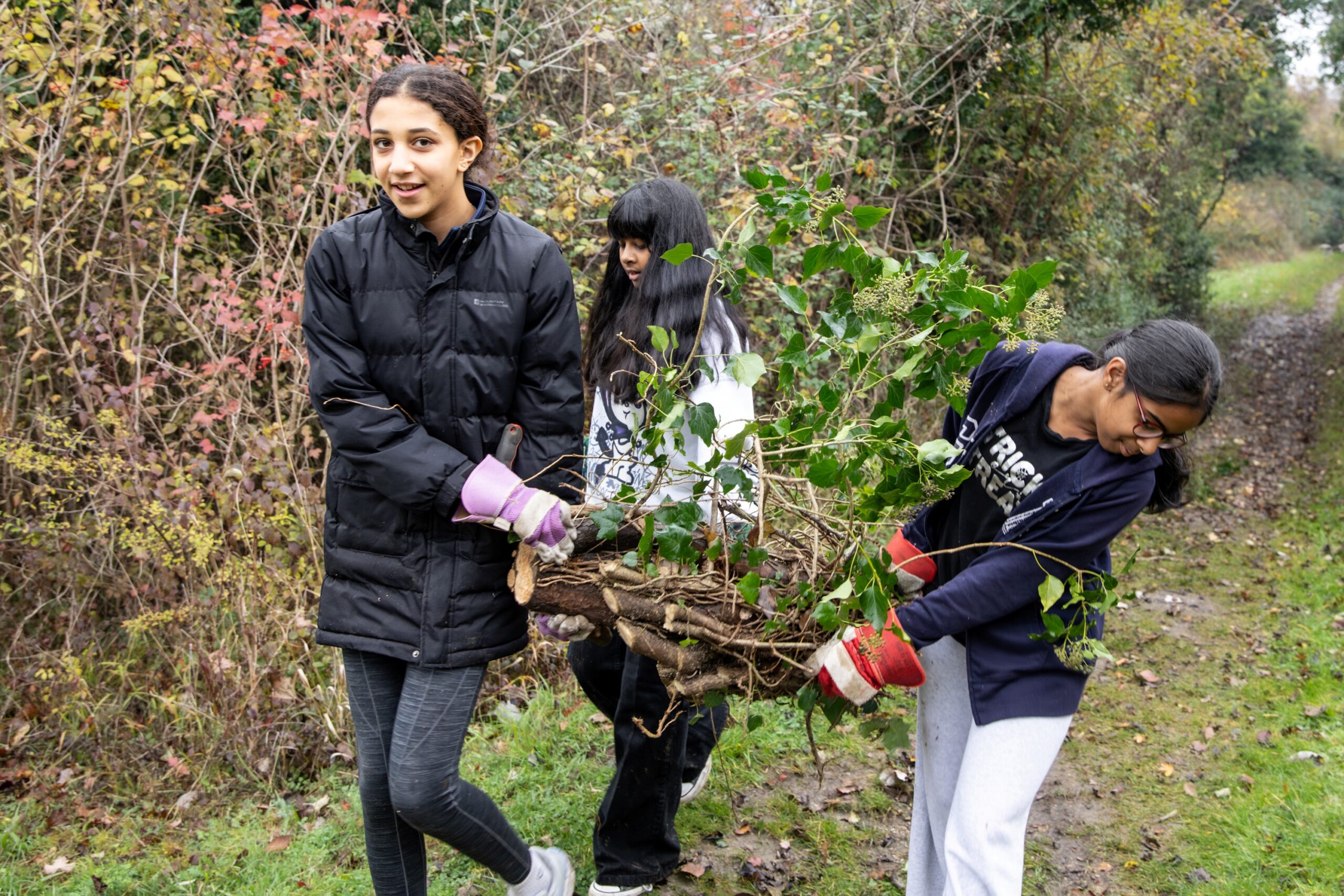
Young people taking part in a scrub clearance session with Chiltern Rangers, in the Chilterns
Wildlife Trusts
Beds, Cambs, and Northants (BCN) Wildlife Trust offers free monthly Saturday and School holiday sessions for 12-17 year olds. Luton and Bedfordshire Youth Rangers sessions take place on reserves around the county including Flitwick Moor, Cooper’s Hill, Totternhoe and Blow’s Downs. Booking is required, and a parental consent form needs to be completed before the first session.
BBOWT at College Lake, near Tring, (as well as other sites further afield) offers parent and child sessions up to age 7, and then low cost bookable drop off sessions for ages 8-11 years and 11-17. Young Ranger and Teen Ranger sessions currently open for booking.
The Box Moor Trust
The Box Moor Trust in Hemel Hempstead offers a monthly drop off Youth Ranger session aimed at 8-16 year olds who are passionate about nature and keen to learn more about the natural world. Participants try a different activity each month, giving them an insight into the varied work of a ranger. Activities are tailored to the season and the Trust’s current conservation priorities and include surveying and conservation work. These sessions are charged on a suggested donation basis.
Amersham Museum Young Curators
Amersham Museum has an informal and friendly Young Curators group for 14-18 year olds, which works alongside the staff team on a range of activities and projects such as designing exhibitions and developing learning resources.
Rebel Rangers
Rebel Rangers is a free school holiday programme for young people aged 11-16 (or up to 18 for those with special education needs). Designed for those who enjoy being outdoors, it offers the opportunity to support the Chiltern Rangers team with practical conservation work while learning about the wildlife and habitats of the Chilterns. Transport is provided to sites from the Chiltern Rangers depot in High Wycombe.
New Shoots - River Thame edition
New Shoots is a free, hands-on wildlife and conservation programme for 14–18 year olds in the River Thame catchment. Through monthly sessions over the course of a year, participants can explore nature, learn from local conservation experts, and take part in practical habitat management work along rivers, streams, meadows and wetlands. Support with travel is provided.
Whipsnade Zoo
Whipsnade Zoo offers a paid 4-day academy for 15-17 year olds which covers a variety of topics including conservation.
The National Trust
If you are interested in the environment or conservation, the National Trust has lots of opportunities. You could go on a Youth Discovery holiday (if you are aged 16 to 18), do voluntary work at a National Trust property or become a Young Heritage Leader.
Forest schools and holiday clubs
There are many privately run forest schools and holiday clubs for children and young people, typically up to the age of 13, and in some cases 16. While these may be less structured in terms of skills development and formal learning outcomes, they can provide valuable opportunities to spend time outdoors and connect with nature.
Examples include Path Hill Adventures, Wild Kites, Black Park Forest School and Lindengate Charity among others.
The Field Studies Council
The Field Studies Council offers a range of courses and residentials for 16-18 year olds – with a centre in Amersham, and many others around the country.
Duke of Edinburgh
An organised programme for young people aged 14-24, providing the opportunity to volunteer and gain valuable work experience in a variety of areas including the outdoors, and combatting climate change. The Duke of Edinburgh (D of E) charity licenses thousands of organisations that work with young people, including schools, colleges and youth groups, to run the D of E across the UK.
The John Muir Trust
The John Muir Award is open to children from upper primary school to adults, either through an organisation or on a self-guided basis. It aims to inspire people to enjoy, connect with and care for wild places. The award operates largely through established organisations, but self-guided participants can design their own award based around the places and activities that interest them – such as trips to wild places, outdoor hobbies or volunteering in conservation.
CHAP (Chilterns Heritage & Archaeology Partnership)
The Chilterns Heritage & Archaeology Partnership CIC aims to protect and celebrate the heritage that tells the stories of all of us. They run an annual training excavation suitable for ages 16+, offering a hands-on introduction to archaeology – excavation, recording, illustration, site photography and more.
Held at a different location each year, the September 2026 excavation near Ashwell, Hertfordshire, will focus on a site of Late Iron Age and Roman settlement and ritual activity. Suitable for both beginners and those with some archaeological experience, the field school will provide practical skills and a deeper understanding of archaeological methods and techniques.
A Skills Passport and certificate of completion will be provided at the end of the training, and this can form either a useful start to a graduate traineeship with a commercial archaeology unit or satisfy the fieldwork conditions of many undergraduate university Archaeology and Anthropology courses. Several of the 2025 CHAP participants have gone on to study or work in archaeology as a career.
Watch a video of a young volunteer talking about their excavation experience on our FAQs page.
CHAP also run community excavations and guided walks. Please get in touch for more info.
Young Archaeologists' Club (YAC)
The Young Archaeologists’ Club (YAC) is open to young people aged 8-16 and offers fun, hands-on opportunities to explore archaeology, local history and heritage. Activities can include investigating archaeological sites and historic places, trying traditional crafts, taking part in excavations and discovering how people lived in the past.
There are two YAC branches in the Chilterns area:
Chiltern YAC – Based in Jordans, near Beaconsfield, Chiltern YAC is a small branch that usually meets on the last Saturday of the month, 10.00–12.00, between September and June.
Aylesbury YAC – Based in Aylesbury, Aylesbury YAC usually meets once a month on a Saturday morning, 10.00–12.00.
School-based work experience
School-based work experience typically involves short-term placements (usually one to two weeks), workplace visits and virtual opportunities designed to help students develop transferable skills, explore potential career paths and gain an understanding of workplace culture. These opportunities are generally arranged through school careers coordinators or via direct applications.
While local schools often have established links with a range of employers, the examples below highlight opportunities within the nature and heritage sectors across the Chilterns. Please note that these placements are often highly sought after and competition for places can be strong.
See some examples below.

A young person exploring Wycombe Museum's chair galleries during their work experience programme
Chiltern Rangers
Chiltern Rangers offers one week work experience placements for those in Year 10-13 in mainstream or home education, offering around 30 placements a year.
They have a huge amount of information on their website which aims to prepare young people (and schools) for their work experience, including ‘a day in the life’ videos (available in English, Polish and Makaton, with Urdu coming soon).
Local museums
Wycombe Museum has recently redeveloped its summer work experience programme for young people aged 14 and over, offering insights into collections, education, visitor experience and more.
Amersham Museum accepts ad-hoc work experience requests for young people aged 14 and over, covering areas like collections care, education, front-of-house, research, and event support in a historic setting.
Other local museums such as Discover Bucks, Road Dahl Story Centre and Chiltern Open Air Museum may also have opportunities.
Local councils
Local councils may offer work experience placements, and/or have a directory of opportunities.
Volunteering and Citizen Science
Volunteering can be a rewarding way for young people to gain new skills, build confidence, support their wellbeing and explore careers in conservation and heritage.
Independent volunteering opportunities for under-18s in the Chilterns are limited, but some local and national organisations offer youth-focused programmes. Others accept volunteers aged 16 and over with parental consent, or younger volunteers when accompanied by a parent or carer.
Volunteer roles vary widely and may include practical conservation work on nature reserves, supporting events and fundraising activities, assisting with administration or social media, or helping to care for museum collections.
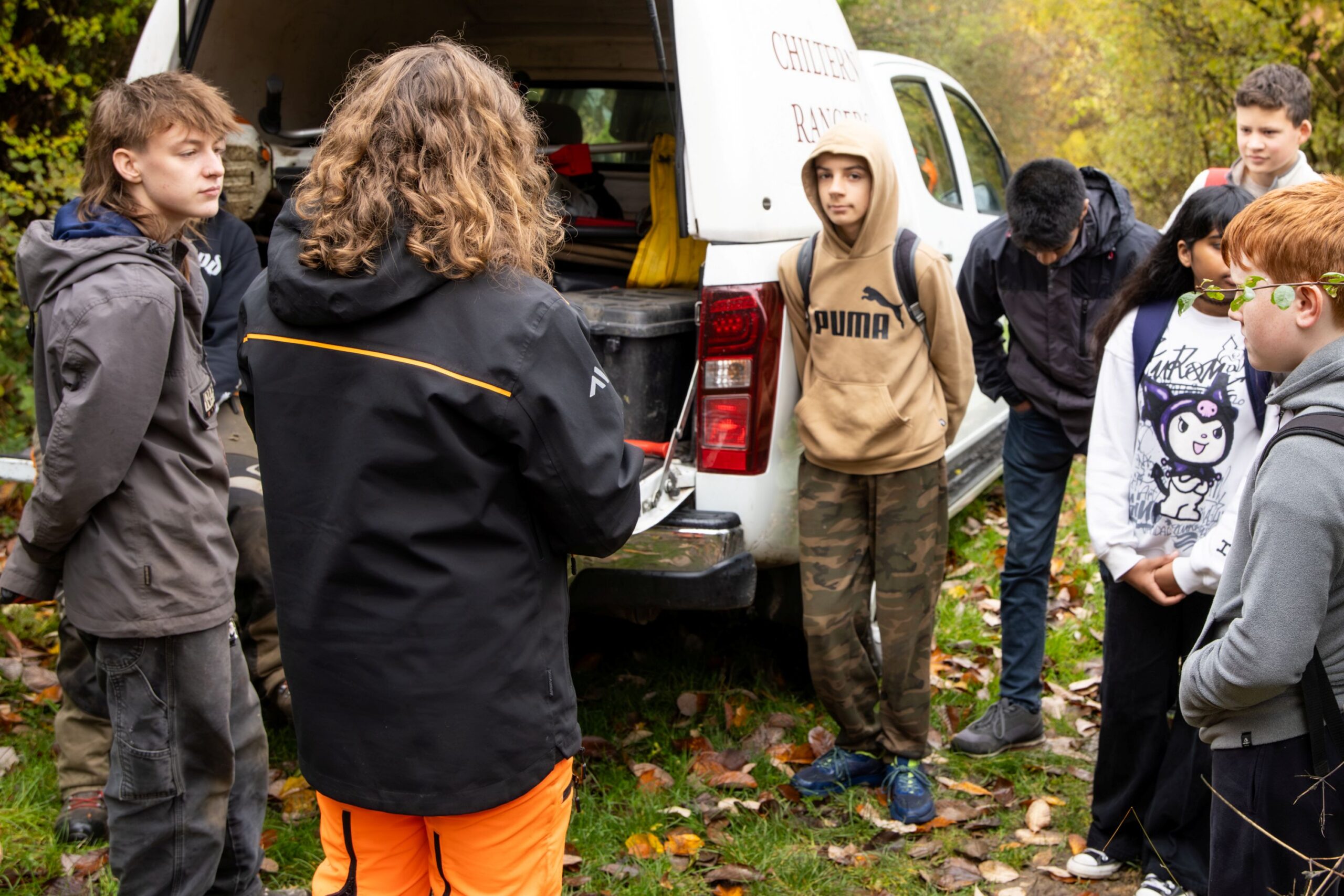
A group of young people being briefed by Chiltern Rangers' staff before starting a practical conservation session in the Chilterns
Volunteering is unpaid, although some organisations may reimburse expenses such as travel. Many roles include training, making volunteering a great way to develop skills and gain experience, particularly for those interested in a career in conservation or heritage. Time commitments are often flexible, depending on the role. While volunteers may need to arrange their own transport, some organisations can provide support. Any equipment required is usually supplied, and organisations have a duty of care towards their volunteers. You, or a parent/carer if you are under 18, may also be asked to sign a volunteer agreement outlining responsibilities and expectations.
Citizen Science
Citizen science is a growing area of conservation volunteering that enables people to contribute to scientific research, for example by monitoring plants, butterflies or riverflies in their local area. Opportunities for young people can be more limited, as many projects require specialist training, but there are some options available. See examples below.
Trusteeships
In the UK, the minimum age to be a charity trustee is generally 16 for incorporated charities (companies or Charitable Incorporated Organisations – CIOs), although some CIOs may say state otherwise in their constitution, or may not be able to take under 18s for operational reasons. As such, it’s more usual for these roles to be filled by over 18s. There are lots of resources and young trusteeships listed here – and other ways to get your voice heard. See examples below.
BBOWT and BCN Wildlife Trusts
BBOWT and BCN wildlife trust sometimes have volunteering roles for young people– such as this one for a role in their visitor centre.
Chiltern Rangers
Chiltern Rangers offers volunteering for young people – accompanied by an adult if the child is in Year 9 or below, and with an adult signing the young person in and out for those in Years 10-13. Spend time in the great outdoors and get that feel good factor from a day of fresh air, exercise and giving back to the environment. Often transport can be provided from the Chiltern Rangers depot in High Wycombe.
There is a wealth of information on the website which prepares people for volunteering with them, including useful ‘a day in the life’ videos.
Wycombe Museum
Wycombe Museum accepts young volunteers aged 16+ for a range of roles, as well as a ‘youth ambassador’ team.
Lindengate
Lindengate Green Volunteens is open to anyone aged between 13-18 on Saturday mornings – offering nature based conservation, bushcraft, heritage skills and garden maintenance.
Community Impact Bucks
Community Impact Bucks’ Volunteer Bucks portal has advice for volunteers aged 13-17.
The Earth Trust
The Earth Trust in Oxfordshire has young volunteer roles especially for those aged 13–18 years, to enable young people to get out in their green spaces and learn more about the local environment.
Previous experience is not required to take on the young volunteer roles, as full training and ongoing support is provided. Commitment to a regular slot is requested, whether that’s weekly or monthly. If you’re interested in an outdoor role, appropriate clothing for all weathers is a necessity. Support is available for this if required. Under 18s will need parental permission.
BTO Citizen Scientist
Volunteer as a Citizen Scientist: As a BTO Citizen Scientist, you will go out and collect data about the birds and wildlife in your surroundings and upload it to the national database. (11+)
RSBP
RSBP run local youth groups offering young people the chance to explore local wildlife, carry out practical action to save nature and have fun outdoors together with like-minded friends. You can also visit their reserves for free by showing photo ID.
Canal and River Trust
Canal and River Trust – be a Young Volunteer. Whether you’re interested in developing your skills and employability, driving social action, or improving your health and wellbeing, Canal and River Trust have something for everyone.
Local environment groups
Many towns have local groups and conservation initiatives, such as Sustainable Amersham and Transition Towns, which regularly organise litter picks and other community sessions to get involved with. Keep an eye out in your local area.
The Conservation Volunteers
The Conservation Volunteers supports people to take practical action to improve both urban and rural environments. It offers a wide range of opportunities in and around the Chilterns, including community conservation projects, arts initiatives, Green Gym activities, project delivery, training and skills development, and even conservation holidays. In general, under 16s need to be accompanied by a parent or guardian, and 16/17 year olds need consent of their parent or guardian.
Youth voice
Youth voice programmes empower young people to take action for the environment, connect with like-minded peers, and share their concerns and hopes for the future, while developing valuable skills and experience. Young people’s perspectives are vital in conservation, as they will be most affected by the impacts of biodiversity loss and climate change. Opportunities range from informal advisory groups to formal governance roles that directly influence decision-making. While local opportunities are limited, several national programmes are available, many of which can be accessed online.
See examples below.
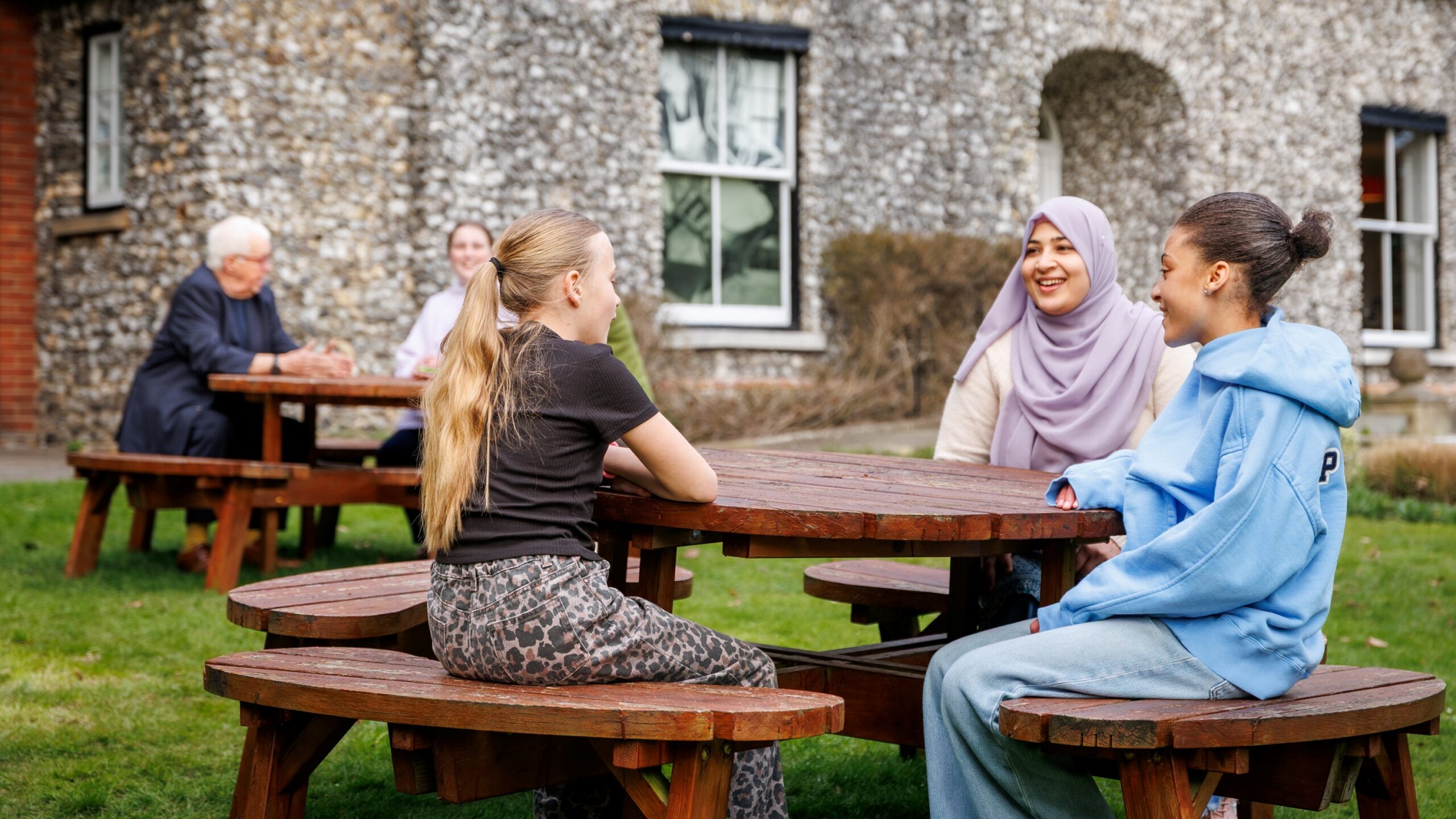
A group of young people chatting with a volunteer at Wycombe Museum
Luton Youth Network
Luton Youth Network encourages and supports young people aged 11-25 to organise and lead activity , including the annual Luton Youth Climate Action Summit.
BCN Wildlife Trust
BCN Wildlife Trust’s Young People’s Forum is made up of young people aged 13-24 aiming to help the Trust work better for young people and inspire action for wildlife.
Wycombe Museum
In early 2026 Wycombe Museum launched a youth ambassadors programme, seeking 5 youth ambassadors – contact them for more information.
Youth in Nature Summit
The annual Youth in Nature Summit in Cambridge is a fantastic day designed for young people by young people.
Youth Climate and Nature Panel
The Youth Climate and Nature Panel will bring together 15 young people aged 16 to 25 from across the UK to help inform government thinking on climate and nature policy. Panel members, representing a wide range of backgrounds and experiences, will share their views with government, provide insight and advice, strengthen engagement with other young people and help encourage collaboration between generations. Applications close on Friday 11 September 2026.
Hearing from younger voices
Alongside recruitment for the panel, the government has launched Young Voices for Climate and Nature. Young people aged 16 and under from across the UK are invited to share their ideas about climate and nature. These ideas will help shape what the Youth Climate and Nature Panel focuses on when it starts in late 2026.
National organisations
National organisations often have more resource to run youth programmes – there are many to choose from and search for but some great examples include:
- Heritage Trust Network
- BTO YAP
- RSPB Youth Council
- Wilderness Foundation
- ZSL Youth Advisory Board
- Habitats and Heritage
- Groundwork
- English Heritage
- Campaign for National Parks
- Action for Conservation – developing young leaders, ambassadors and youth rangers
Looking ahead to a career in conservation
If you are keen to move towards a career in conservation, here is some information on possible routes which you may like to explore.
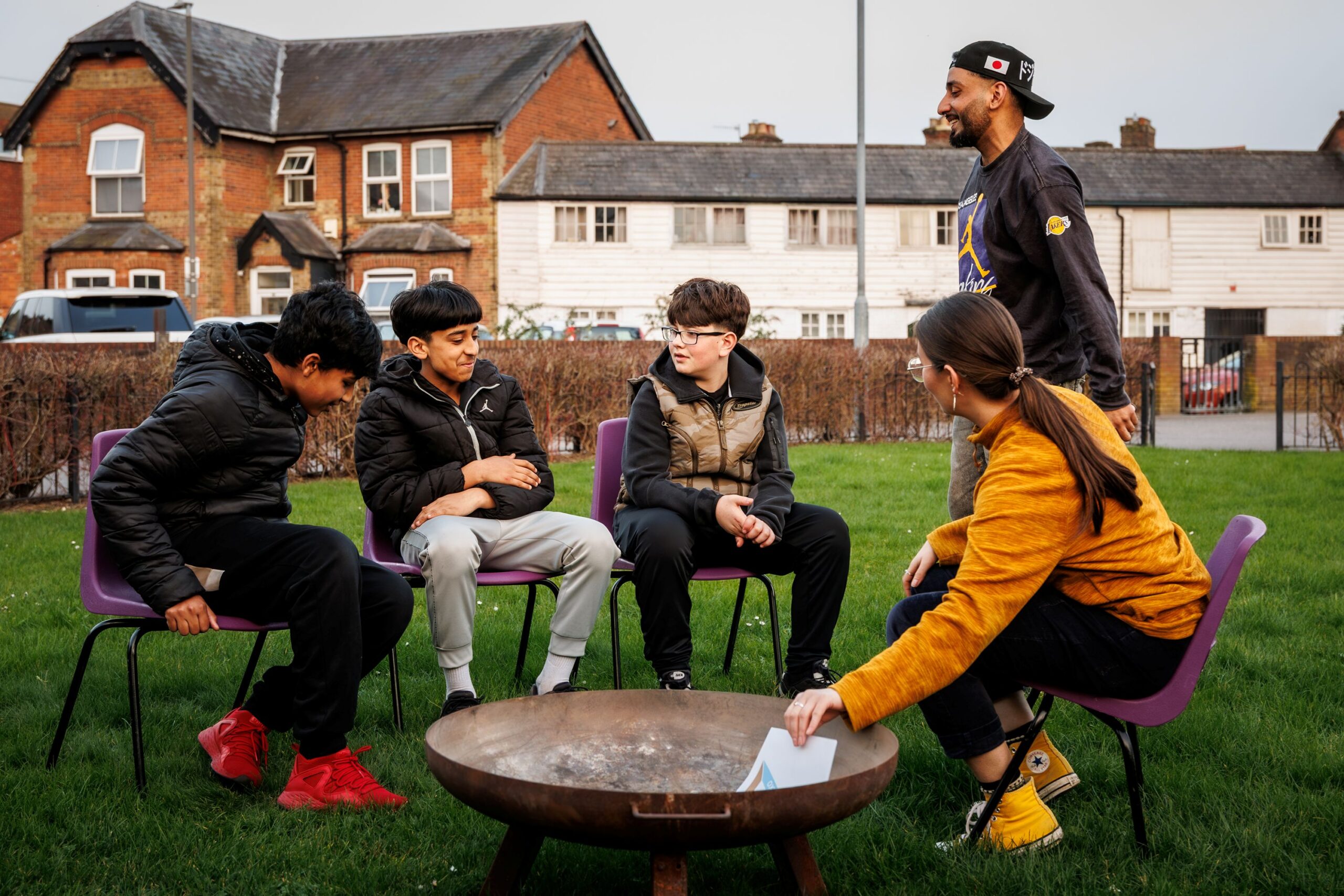
A group of young people learning how to safely light a fire on some green space in central High Wycombe
Apprenticeships
Apprenticeships combine paid employment with training and study, allowing people aged 16 and over to earn a wage while developing job-specific skills and qualifications. They are delivered through a partnership between an employer, the apprentice and a training provider, college or university.
Apprenticeships are available in a wide range of conservation and heritage-related occupations, including Countryside Worker, Countryside Ranger, Ecologist, Cultural Heritage Conservator and Environmental Practitioner, although opportunities may be limited within the Chilterns. Depending on the level and occupation, apprenticeships can take between eight months and six years to complete.
Traineeships
Traineeships are defined as a programme of learning and skills development, which are focused and flexible. They have a direct line to employment (although a job at the end is by no means guaranteed) and aim to provide young people with a positive experience in the sector they are interested in. The training provider can tailor the programme to meet the needs of the individual, helping them to progress and enhance their skills. The provider of the traineeship is responsible for the overall delivery and quality of the traineeship. We do not know of any traineeships for under 16s in the Chilterns at this point.
Opportunities for over 18s
Take a look in the 18+ and Early Career section for some further information on getting into a career in conservation, such as specialist jobs sites, traineeships and careers fairs.
Other examples and inspiration
The examples below showcase inspiring projects that have engaged young people, either in the Chilterns or elsewhere. While these programmes may no longer be running or may not be open to everyone, many have produced useful resources and learning materials. They also provide valuable inspiration for organisations looking to develop their own work with young people.
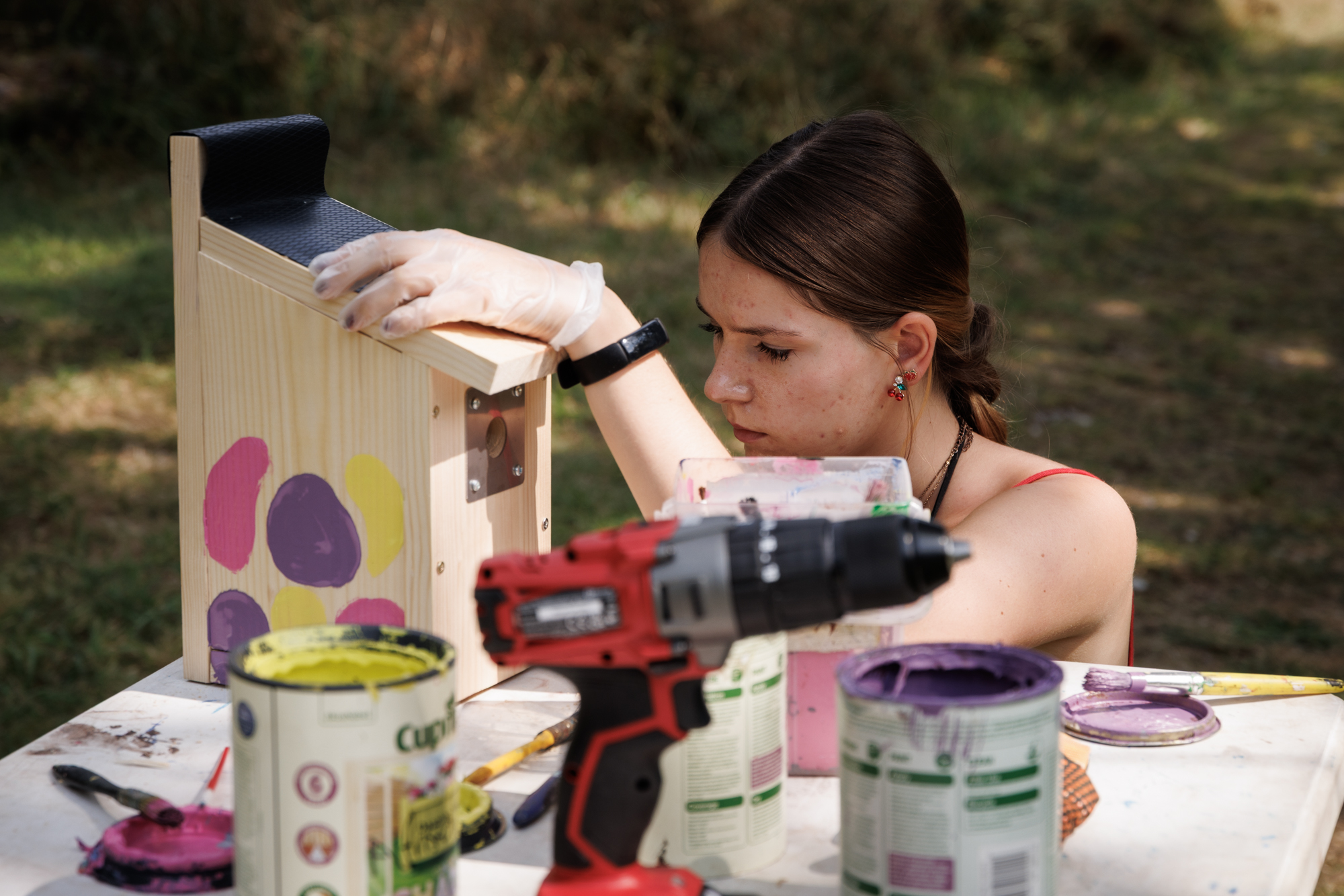
A young woman painting a bird box in the outdoors during a session with Chiltern Rangers
Project Rejuvenate
Project Rejuvenate ran a successful pilot, and fundraising is ongoing to run it again. It uses creative activities in historic locations to improve the physical and mental wellbeing of young people.
New to Nature
In 2023 ‘New to Nature’, a green jobs programme, offered sixty paid roles nationally to encourage 18-25 year olds, and especially those from under-represented backgrounds, into paid work in the environment sector.
Next Gen Project
In 2024-25 several organisations in the Chilterns tested a variety of new approaches to youth engagement and youth voice, through the Next Gen Project.
Revoluton Arts
Revoluton Arts is a Luton based arts producer working with the local community. They have a Young Revolutonaries programme and all roles receive some renumeration, they don’t have unpaid volunteers. Their approach is to reduce barriers to participation.
Shropshire Hills National Landscape
The Shropshire Hills National Landscape has been developing a Green Leaders programme for 17-21 year olds, in partnership with the local college and with South Shropshire Youth Forum.
Herts Wildlife Trust young volunteers
Unfortunately this scheme is no longer running but is a great example of volunteering for young people.
Image credits: Neil Marshment Photography