Chilterns Rural Industries and Crafts
The Chilterns National Landscape is generally regarded as a sweeping landscape of beechwoods, chalk escarpments and picturesque villages. But, for more than two centuries, it was also a unique industrial setting.
The woods and villages were alive with chairmaking, wood-working, straw plaiting, lacemaking and beading. As the mostly female lace and plait industries declined in the second half of the 19th century, some women began working at home or in village workshops doing ‘fancy work’ – making decorative trimmings or panels for clothing and hats. Others learned the art of caning or matting (rushing) for chair seats and backs. Brickmaking, tilemaking and pottery were also a feature of the Chilterns, but it was the furniture industry that thrived right up until the late 20th century and came to define the region.
Some companies, such as Ercol and William Hands are still keeping the furniture traditions of the Chilterns alive.
We already knew quite a lot about the Chilterns’ rural trades and the artefacts that were produced but we knew much less about the everyday experiences of the men, women and children who made their living in these woodland and home-based industries. Volunteer researchers in the Woodlanders’ Lives and Landscapes project told the stories of these people through blogs and videos, talks and tours, an exhibition and workshops. Jane Barker, one of the volunteers, shares her experience here.

You can find more of the volunteers’ blogs and their videos on the links below.
The Woodlanders’ project also produced two books which you can order or find in local libraries:

|
In Their Own Words: Memories of the Chilterns by Volunteers from the Woodlanders’ Lives and Landscapes Project, edited by Helena Chance and Lesley Hoskins. Hidden Hands. 100 Years of Women and Work in the Chilterns by Helena Chance and Lesley Hoskins with Volunteers from the Woodlanders’ Lives and Landscapes project. |
 |
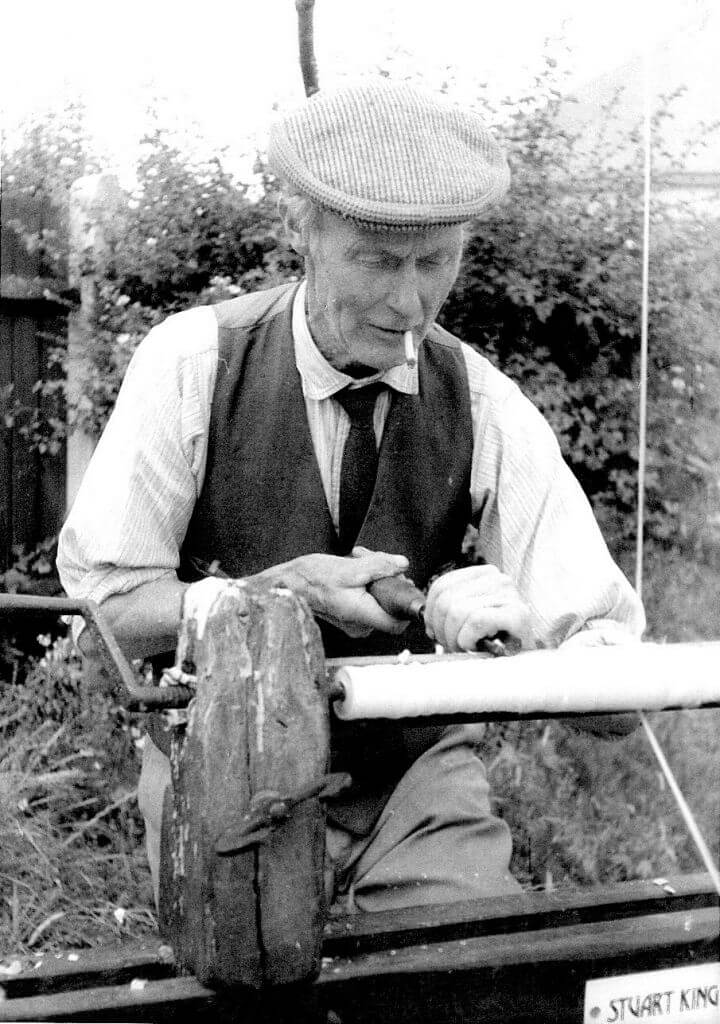
Header image courtesy of the Stuart King Collection.
Explore
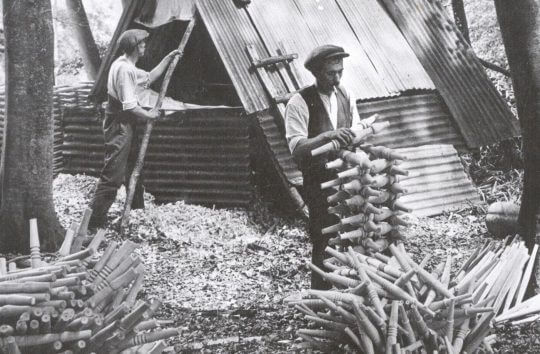
Chairs and chairmakers
Chairmaking in the Chilterns goes back at least to the 17th century, and by the middle of the 19th century, the region and the town of High Wycombe were rapidly becoming the leading centre for the industry in Britain.

Pubs and beerhouses
Chilterns pubs and beerhouses played an important part in the history of chairmaking in the Chilterns

Straw plaiting for the hat industry
Straw plaiting flourished in Buckinghamshire, Bedfordshire and Hertfordshire from the early 18th century.

Lacemaking and lace dealing
Lacemaking was known in Buckinghamshire in the 16th century and by the 19th century, large numbers of women and children in the towns and villages were making bobbin lace at home.

Beading and braiding for the fashion industry
As lacemaking and straw plaiting declined in Chilterns villages, some women took up an alternative craft, making decorative trimmings or panels for hats or clothing.




Discover the timeline of the Chilterns
There has been a rich and varied geology and history in the Chilterns – from the Cretaceous Period, when shallow seas laid down the distinctive chalk of the area, right up to today’s working landscape.

Bookable experiences
We have carefully chosen our most immersive and memorable Chilterns countryside experiences to share with you here. Choose from active countryside, food & drink, countryside learning and Chilterns sightseeing. All are bookable online.