Mend the Gap: four years of planting across the Goring Gap
by Belinda Bown – Senior Farm Environment Advisor, FWAG South East
Mend the Gap began in 2019 to improve parts of the Goring Gap landscape impacted by Great Western Railway electrification.
The programme integrates the North Wessex Downs and Chilterns National Landscapes, focussing on the railway corridor between Reading and Didcot.
The aim is simple: to help soften the visual impact of the large metal gantries that support the railway electrification infrastructure. Initially, a landscape architect assessed the visual landscape and prioritised views where trees and hedges could help mitigate the impact. In 2022, Farming and Wildlife Advisory Group (FWAG) South East joined the project to manage the programme of planting.
What have we achieved so far?
Working with landowners is key to success. Each year, FWAG South East looks at planting options on the ground, considering the local landscape character, how the land is used, and what each landowner is hoping to achieve.
By March 2026, the team at FWAG South East has helped to:
- Identify 60 sites with potential for planting
- Engage with 95% of landowners
- Plant on more than 50% of the identified sites
- Plant more than 720 hedgerow trees or individual in-field trees
- Plant more than 25,000 hedgerow plants
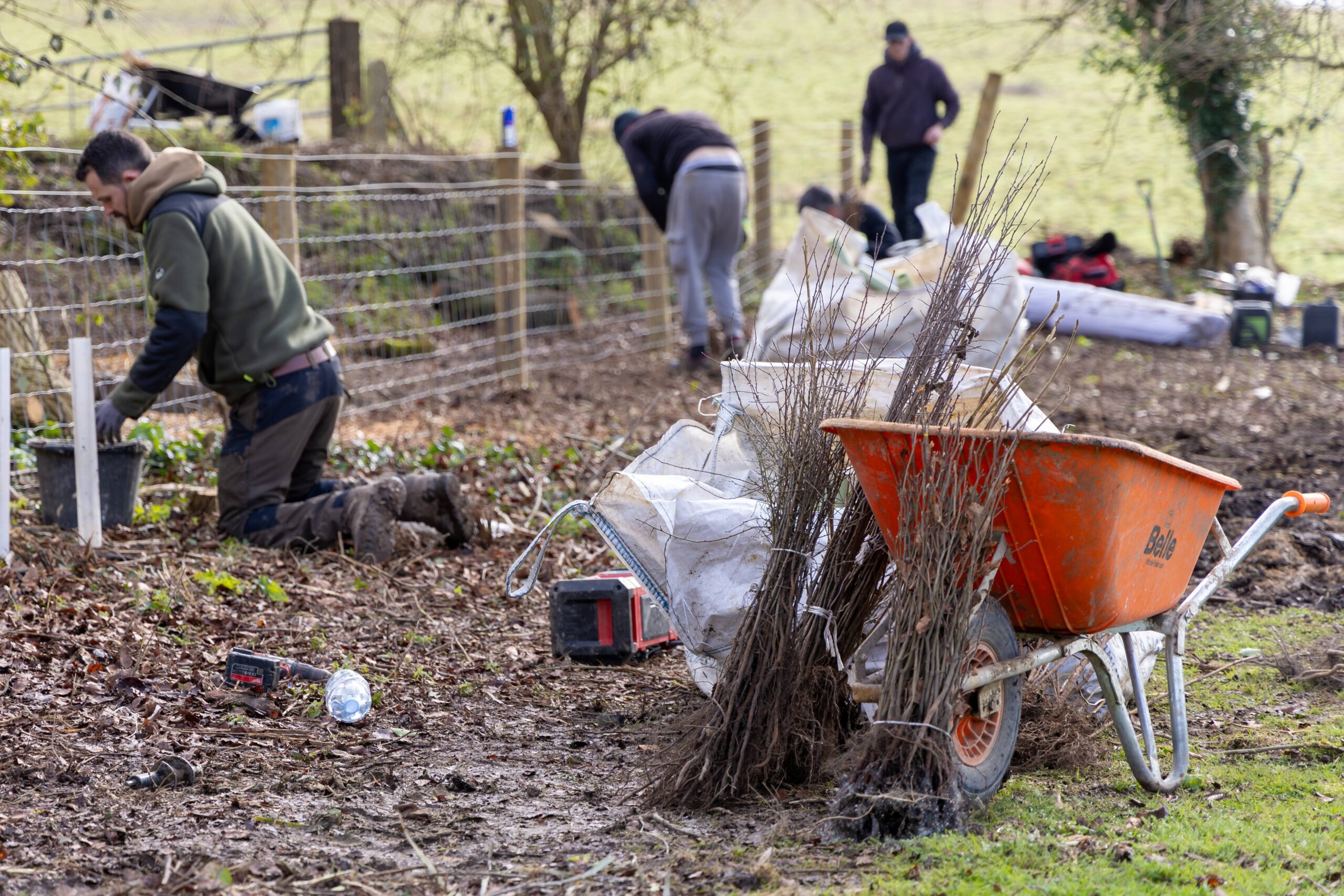
Most of the hedgerow planting uses a native mix, including 50% hawthorn and 10% blackthorn, with the rest from at least five other native species such as hazel, holly, dog rose, wayfaring tree, spindle, wild privet, and field maple. We also help landowners to select larger hedgerow trees or individual native trees that suit the local landscape, providing screening as they mature.
Planting phases: South Stoke; Goring to Purley; Moulsford to Didcot
In 2022, planting began around South Stoke, one of the villages most affected by the railway infrastructure. Working with Oxfordshire Highways, South Stoke Parish Council and local landowners, more than 2.5 km of new hedgerow and over 100 hedge trees were planted.
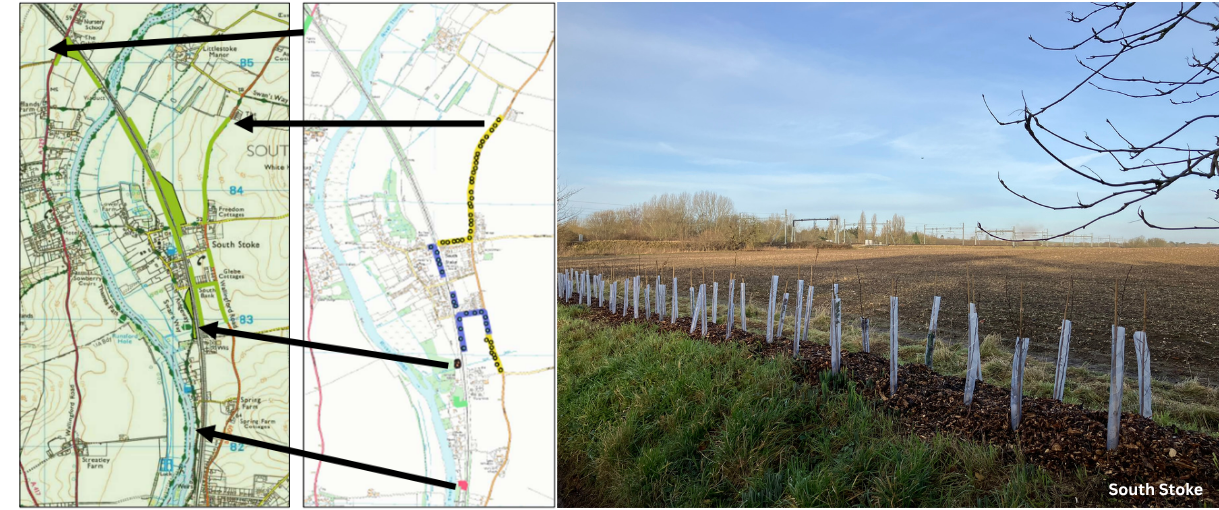
In 2023, work expanded south from Goring to Purley-on-Thames. Over 1.75 km of new hedgerow and 475 new trees have been planted along this stretch, including 300 trees as part of the Sulham Estate’s wood-meadow project, Sulham Woodmeadows.
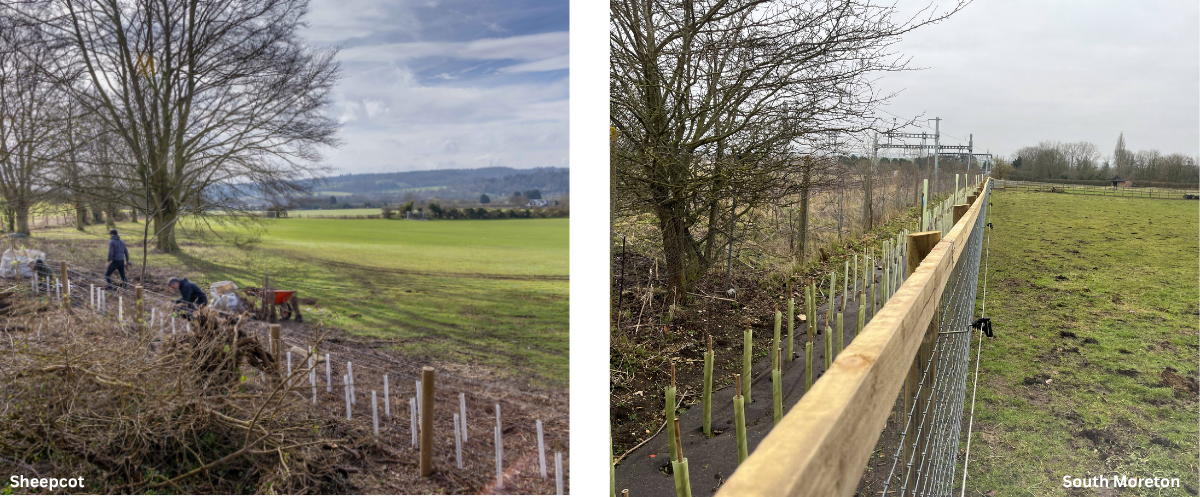
The recent phase runs from Moulsford towards Didcot. The open arable landscape around Cholsey and South Moreton brings challenges, but landowners have been constructive in helping us with planting opportunities. Over 100 trees and 0.5 km of hedgerow have been planted here.
What we have learned along the way
We have to be adaptable. Planting cannot always be in locations originally recommended by the landscape architect. There are practical constraints as well as landowner requirements. These include land access which impacts the machinery we use, and we avoid underground utilities and sensitive features such as a Roman villa. We have to choose the right tree for the right place, considering soil, landscape type, the appropriate mulch and the species’ future resilience. This flexibility means our planting supports the aims of Mend the Gap while ensuring it works for the people who manage the land day to day.
We are fortunate to work with many supportive landowners, and we hope these relationships will continue with both FWAG South East and the National Landscapes beyond Mend the Gap. We look forward to seeing the trees mature over time and have a positive visual impact on this landscape.
Related news

Exciting improvements coming to the Chess Valley Walk
Restoration works and access improvements along the Chess Valley Walk have begun to enhance the surrounding landscape for both people and wildlife.

13km of power lines disappear from the Chilterns National Landscape in a major undergrounding project
The Chilterns National Landscape is thrilled to welcome the completion of a £2 million project to remove over 13 km of overhead electricity lines from the Chess Valley area.

A greener Hamble: seeing the benefits of river restoration in a summer of drought
During one of the driest summers in recent years, we're getting a striking glimpse of how the restored landscape is responding.
Mend the Gap
How we are reducing and compensating for the visual harm done to the Chilterns and North Wessex Downs National Landscapes by the electrification of the Great Western main line.
Chilterns Management Plan
The Management Plan sets out the policies and actions to be followed by all stakeholders to conserve and enhance this special place. The current plan runs to the end of March 2030.

Nature Recovery Plan
The Nature Recovery Plan is a practical, evidence-based guide to help restore habitats, strengthen biodiversity, and support resilient landscapes across the Chilterns.